
Contents
Most office workers spend a significant amount of time each year in meetings, yet ironically, nearly half of them leave the room feeling that the session had no clear purpose. Data from the National Centre for Universities & Business in the UK records that the average worker spends the equivalent of 208 hours per year just sitting in meetings. This figure is not merely an administrative statistic, but an indication of a gap between time investment and results achieved.
Meeting failures are often not caused by a lack of good intentions among participants, but rather by structural and psychological factors that are rarely discussed openly. A comprehensive study commissioned by Radisson Blu and conducted by Patrick Fagan from Goldsmiths University revealed how the physical environment affects idea quality and decision-making. Meanwhile, a separate survey by Opinion Research USA highlighted small habits such as phone usage or late arrivals as triggers for collective frustration.
The Influence of the Physical Environment on Idea Quality
An experiment involving twenty-five volunteer groups divided participants into three different work scenarios: video conference calls, standard meeting rooms, and aesthetically and functionally enhanced meeting rooms. The results showed a strong correlation between room design and creative output. When participants met face-to-face in the enhanced room, the return on investment for idea generation increased by 61 percent compared to video calls, and was 31 percent higher than in standard meeting rooms.
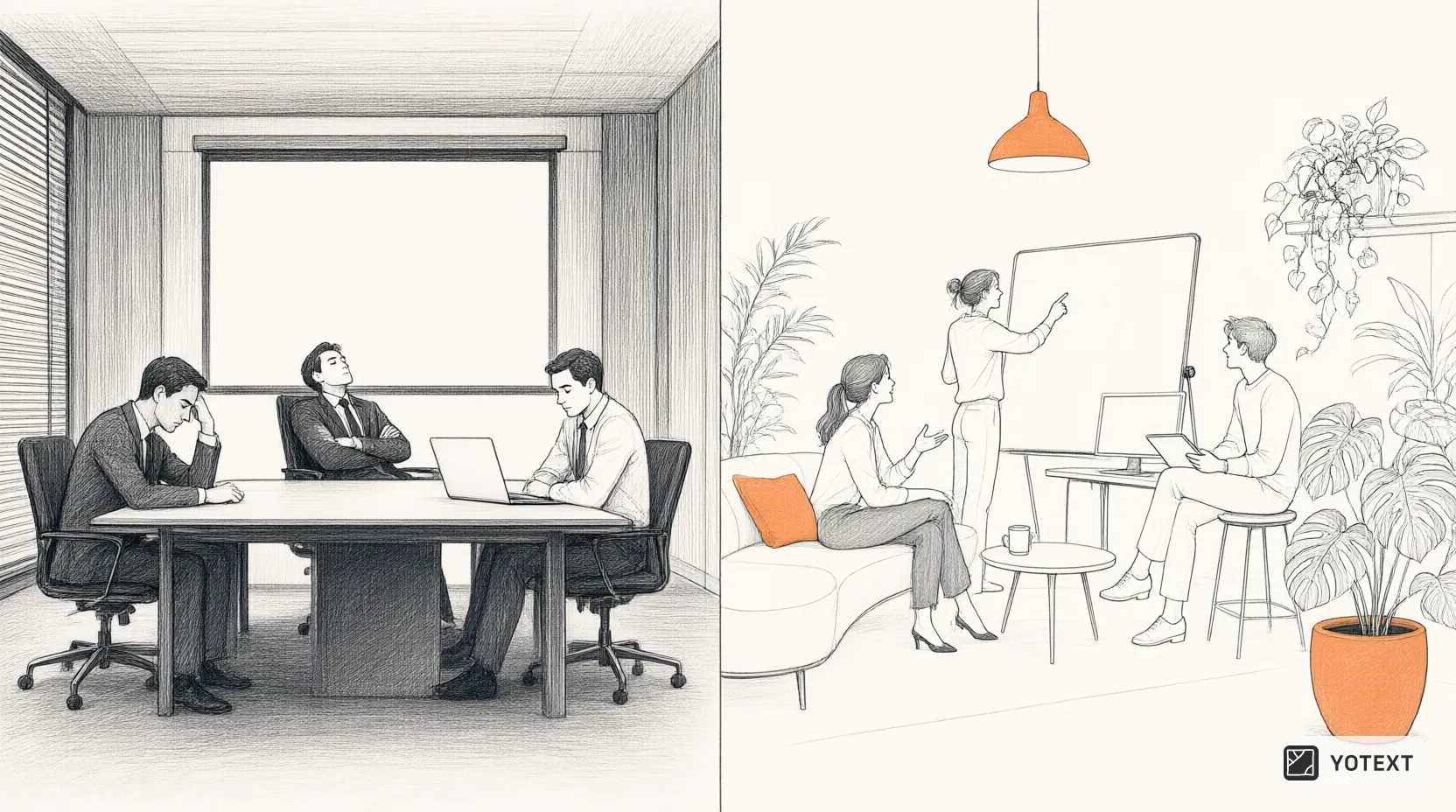
Another interesting aspect is the participants' own perception. Most participants claimed that their performance would not differ across various environments, even though actual data proved otherwise. Enhanced meeting rooms not only generated more ideas, but also ideas with markedly better quality. This indicates that visual elements and physical comfort act as catalysts for critical and collaborative thinking processes, which are often hindered in virtual formats.
Video Conferencing and Limitations of Social Interaction
Video calls remain an effective tool for tasks requiring rigid thinking and minimal debate. However, when the goal is to make complex business judgments or debate strategy, video conferencing becomes a hindrance. Patrick Fagan explains that workers trying to solve business problems via phone calls tend to be more passive towards other colleagues due to their inability to accurately assess the disposition or body language of the person they are speaking with.
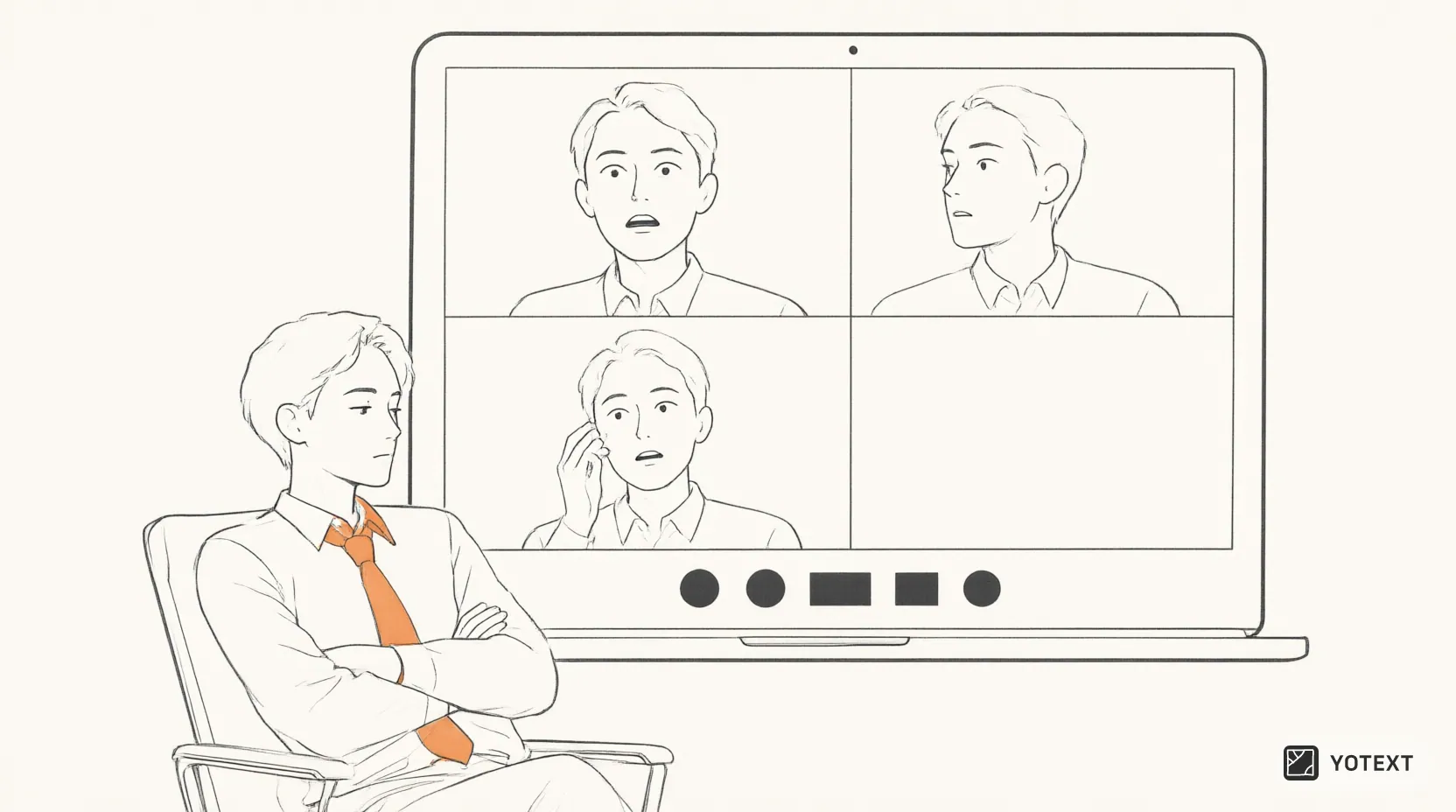
Social dynamics in virtual meetings experience a reduction in interpersonal interaction. Participants lose non-verbal nuances that usually help build trust and understand the emotional context of an argument. As a result, virtual meetings often turn into one-way monologues or highly structured discussions with no room for creative improvisation. This can reduce overall meeting effectiveness and diminish the value of the time invested by the company.
Participant Dominance and Punctuality Issues
The biggest frustration in meetings does not always stem from the content of the discussion, but rather from participant behavior. A survey of 2,000 adults in the UK found that the most annoying habit is having one dominant person who always speaks the loudest, complained about by 40 percent of respondents. This dominance creates participation inequality, where minority voices or immature new ideas are easily drowned out by the volume of a single individual.
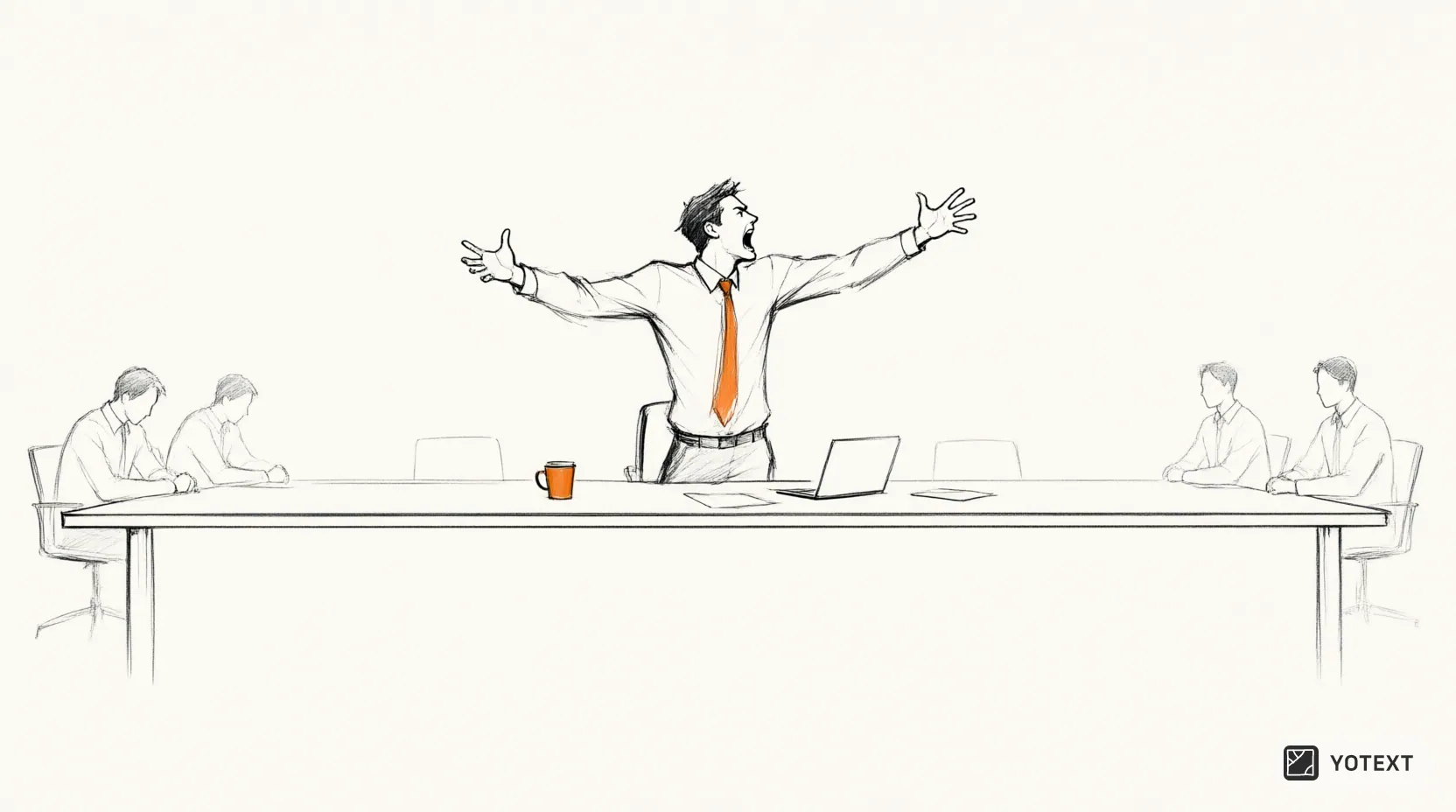
Meanwhile, 24 percent of respondents complained about colleagues who do not arrive on time, and 25 percent felt disturbed by meetings running over the scheduled time. Punctuality issues are not just about personal discipline, but also a signal of disrespect towards the team's collective time. When meetings start late or end without clarity, the boundary between work and personal life blurs, increasing levels of stress and mental fatigue.
Digital Distractions and Loss of Focus
In an era of permanent connectivity, human attention has become a scarce commodity. The 'Ouch Point' study by Opinion Research USA identified disorganization and rambling meetings as the main sources of frustration for 27 percent of US workers. However, external distractions also play a major role. Sixteen percent of respondents stated that interruptions from phones were the most disruptive factor during meetings.
Surprisingly, using mobile devices to check email is considered less invasive than more passive actions such as falling asleep or daydreaming. Nine percent of respondents felt disturbed by colleagues who fell asleep, while only five percent complained about people checking their emails. This indicates that physical presence alone is not enough. Active mental engagement is an absolute prerequisite for meeting productivity. Doodling or meaningless scribbling, acknowledged by 13 percent of respondents as their own bad habit, is a form of escape from poorly managed cognitive load.
Demographic Differences in Meeting Expectations
Tolerance for distractions and preferences for meeting formats vary by age and geographic location. Respondents over the age of 55 considered the lack of bathroom breaks a significant issue, while the 18-to-24-year-old group prioritized the provision of food during meetings. These differences require meeting organizers to be more sensitive to participants' basic needs so they can focus on the substance of the discussion.
Location also plays a role. Workers in the Northeastern United States turned out to be less bothered by disorganized meetings compared to their counterparts in other parts of the country. Nevertheless, overall, 65 percent of respondents still view face-to-face meetings as a more productive method than remote conferences. This preference persists even though technology has enabled cross-continental collaboration, affirming that human touch remains the foundation of professional trust.
Practical Strategies to Overcome Inefficiency
Based on these findings, the first step to improving meeting quality is redesigning the agenda with specific objectives in mind. If the goal is creative brainstorming, avoid video formats if possible, or ensure the virtual space is equipped with adequate collaboration features. Conversely, for quick operational decisions, a strict structure with minimal debate may be better suited for online execution.
Meeting leaders must take an active role in managing social dynamics. Setting ground rules regarding phone usage, ensuring all participants have equal opportunities to speak, and maintaining punctuality are managerial responsibilities that cannot be ignored. Post-meeting documentation is also crucial. The failure to share written summaries after a meeting ends was recorded as one of the complaints, although its percentage is lower than direct distractions during the session itself.
Conclusion
Boring and unproductive meetings are not an inevitable fate, but rather the result of flawed experience design choices. By understanding that the physical environment influences idea quality, and that digital distractions and participant dominance undermine team cohesion, organizations can take concrete steps to change meeting dynamics.
The ultimate goal is not merely to reduce the number of meeting hours, but to increase the value of every minute spent together. When participants feel their time is respected, their voices are heard, and they are supported by a conducive environment, meetings transform from administrative obligations into true engines of innovation.
Sources
https://www.ncub.co.uk/insight/new-study-reveals-we-have-too-many-bored-meetings/