

Contents
In small team dynamics, communication often becomes a double-edged sword. On one hand, closeness among members allows for quick and informal exchange of ideas. On the other hand, the lack of formal structure in delivering messages can trigger misunderstandings rooted in the interpretation of tone of voice rather than the message content itself. When a colleague delivers criticism with a flat or rushed voice, the recipient tends to perceive negative emotions that may never have been intended by the speaker. This phenomenon creates psychological barriers that hinder professional growth and team cohesion.
A practical solution to this problem lies in shifting the focus from how something is said to what is actually being said. By leveraging technology that converts conversation recordings into text, teams can neutralize the emotional bias inherent in audio. This approach allows team members to evaluate arguments based on written logic and facts, rather than subjective intonation or facial expressions. This article will discuss the mechanism of separating content from tone of voice through text transcripts as a foundation for building a healthier, fairer, and solution-oriented feedback culture.
The Mechanism of Emotional Bias in Oral Communication
Oral communication is a medium rich in non-verbal information but also vulnerable to perceptual distortion. In the context of team meetings, the human brain naturally seeks social cues to determine the status and intent of the interlocutor. When someone gives feedback, listeners often filter those words through their own emotional lens. If the speaker sounds tired, firm, or even just speaks quickly due to time constraints, sensitive listeners might interpret it as aggression or indifference. Conversely, a too-soft tone of voice can be perceived as hesitation or lack of assertiveness, thereby diminishing the weight of the argument presented.
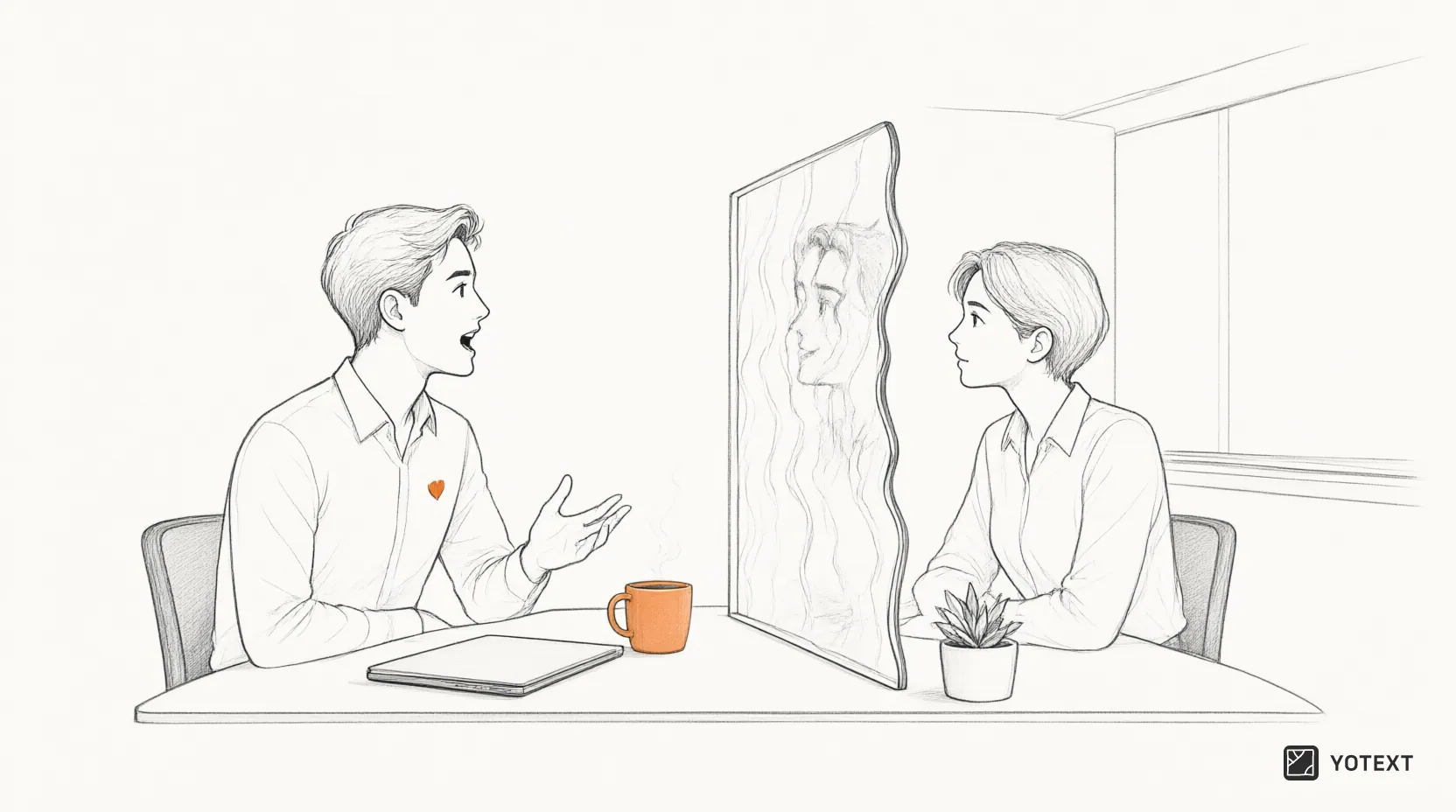
This issue is exacerbated in small teams where power hierarchies may be less clear or personal relationships are very close. Team members tend to bring the history of previous interactions into every new conversation. A neutral sentence like "We need to change this approach" can sound different depending on who says it and their mood at that moment. Without an objective record, the team's collective memory of a meeting is often dominated by feelings arising during the interaction, rather than by strategic decisions made. This makes post-meeting evaluation difficult because everyone remembers a different version of reality based on their individual emotional responses.
Text Transcripts as a Message Neutralization Tool
YOTEXT offers a technical approach to overcoming this emotional bias by converting meeting recordings into readable text transcripts. The process begins when users activate the extension in their computer browser during Google Meet sessions, web-based Zoom, or web-based Microsoft Teams. This extension records the audio from the meeting tab and the user's microphone without involving bots joining as participants. This means the recorder's presence does not alter the room's social dynamics because no foreign entity is listening directly. Users have full control over when recording starts and stops, ensuring privacy remains protected according to their needs.
During the meeting, the extension panel displays a live transcript that can be shared via link. This feature allows participants to see the words being spoken in real-time. However, the main strength of this system lies in the post-meeting results. YOTEXT generates complete transcripts, summaries, decision lists, and action items along with owners and deadlines if mentioned. Crucial for feedback culture is the ability to review what was actually said, separated from how it was delivered. When team members read the transcript, they are forced to process information cognitively through text, which tends to be more rational and less likely to trigger immediate emotional reactions compared to hearing a human voice.
Speaker names in the transcript are taken from captions and meeting participant data if available. If identity is unclear, the system uses neutral labels instead of guessing. This is important to maintain initial objectivity before interpersonal context is introduced. Meeting history is saved and searchable, allowing teams to track the evolution of thoughts or specific communication patterns over time. Tasks from various meetings are collected in a single task list, facilitating accountability without relying on subjective memories of who promised what with what tone.
Examples of Meeting Situations and Practical Application
Imagine a situation where a product designer receives criticism from a project manager regarding the delay of a new feature. In an oral meeting, the manager might sound frustrated due to pressure from clients, using short sentences and a high tone. The designer feels personally attacked and becomes defensive, thus failing to absorb the core message, which is the need to adjust the development schedule. After the meeting, if they rely solely on memory, follow-up discussions will revolve around hurt feelings versus guilt, rather than process improvement.

By using YOTEXT, both parties can open the transcript of that meeting. They find that the specific sentence spoken was "Feature X must be finished by Friday so we can test with the client on Monday." This sentence is factual and clear. There are no words attacking the designer's character or competence. By reading this text, the designer can respond with logical questions such as "What technical constraints caused the initial estimate to be off?" instead of reacting to an angry tone that may never have been explicit in the words. The project manager can also see that their instructions were clear, allowing them to focus on collaborative solutions rather than defending their communication style.
Another practical step is to use the Q&A feature for meeting content. Once the transcript is available, team members can ask about specific details. For example, "Were there any alternative timelines discussed besides Friday?" The system will point to the relevant section of the transcript. This shifts the team's energy from emotional debate to fact investigation. The Team and Business packages provide a shared workspace for meeting results, tasks, and transcription quotas, so all small team members can access this single source of truth without access barriers.
It is important to note that the application is available in Indonesian, English, and Mandarin, facilitating multilingual teams. Meeting results can be accessed from both computers and mobile phones, while recording via extension is done on the computer. This flexibility allows team members to review feedback in calm conditions, away from the hustle and bustle of live meetings, leading to deeper self-reflection.
Limitations and Ethics of Conversation Data Usage
Although text transcripts offer clarity, their implementation requires strict ethical boundaries. First, transparency is key. All meeting participants must know that recording is taking place and will be transcribed. Hiding this process would undermine trust, which is the foundation of a healthy feedback culture. Since YOTEXT works through an extension in the user's own browser, the responsibility to inform colleagues lies with the user. Ideally, a brief announcement at the start of the meeting stating, "We will record key points via YOTEXT for accuracy," can prevent surprises later.
Second, it must be recognized that YOTEXT does not yet have SOC 2 or ISO 27001 certification. For teams handling highly sensitive data or state secrets, this is a critical consideration. Although recordings are kept secure even if the browser closes suddenly or the network disconnects, and can then be resent, organizations must assess cybersecurity risks according to their internal policies. For most general business teams, privacy features such as private meetings visible only to the owner and revocable share links provide adequate control. However, awareness of this certification status should be part of the team's data governance discussions.
Third, do not misuse transcripts as tools for judgment. The goal of separating content from tone is to improve understanding, not to nitpick word choices. If a team member uses harsh language due to fatigue, focus on the incorrect technical content, not on verbal etiquette violations unless it becomes a recurring disruptive pattern. A healthy feedback culture acknowledges that humans are imperfect in delivery but remain accountable for the substance of their work. Using text to shame colleagues will only reinforce fear of open communication.
Implementation Strategies for Small Teams
To begin, choose one type of routine meeting to pilot with the text-based transcription method. Sprint retrospective meetings or weekly status update meetings are good candidates because of their high frequency and dense content. Ensure all team members have installed the YOTEXT extension in Chrome or Edge. The first trial should focus on speaker identification accuracy and output format clarity. If multiple participants in the same meeting use YOTEXT, each person's speech can be corrected using the recording from their own microphone, improving final data quality.
After the meeting ends, allocate specific time for text review. Do not immediately send long emails containing quotes. Instead, share a link to the summary and action items. Ask team members to mark parts of the transcript they consider ambiguous or contradictory. The subsequent discussion should start with the question: "What did we agree upon based on this text?" and not "Who spoke incorrectly?". This shift in language gradually trains the team's brains to process information objectively.
Use the Free plan for initial experimentation before switching to Pro, Team, Business, or Enterprise according to your team's scale needs. Note that pricing and quota limits vary between plans, so adjust them to match your team's monthly meeting volume. Evaluate the impact of this method after one month. Has the number of interpersonal conflicts decreased? Are tasks being completed more on time? Do team members feel more comfortable giving feedback? Qualitative data from a simple internal survey can help measure the success of this implementation.
Long-Term Impact on Team Cohesion
When teams consistently separate message content from tone of voice with the help of text transcripts, a fundamental change occurs in how they interact. Team members begin to learn that criticism of work is not a personal attack. They become more confident that their colleagues are striving for accuracy, not trying to hurt them. This trust is built on consistent written evidence, not just verbal promises. Over time, this creates a psychologically safe environment where controversial ideas can be raised without fear of emotional misinterpretation.
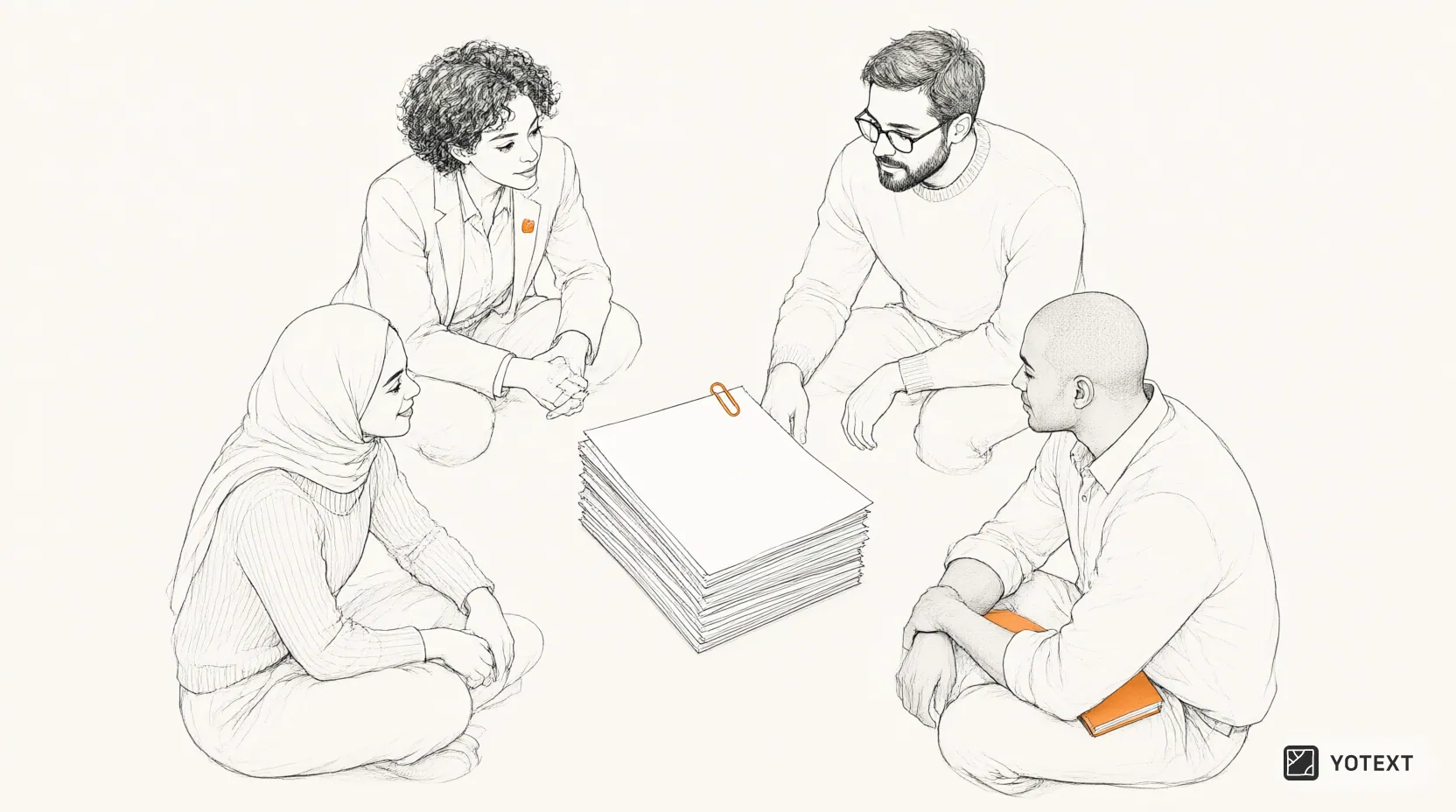
In addition, the habit of referring to transcripts encourages digital literacy and documentation discipline. Small teams often fall into the trap of fragile 'collective memory.' With searchable meeting memories, institutional knowledge does not disappear when team members change roles or leave the company. Past decisions can be traced to understand the context of why a strategy was chosen, including the nuances of the debates that took place at the time. This enables faster and more effective onboarding of new employees because they can independently study the history of team decisions.
Ultimately, the goal of using technology like YOTEXT in the context of feedback culture is to humanize interactions by eliminating unnecessary noise. By clearing away layers of linguistic and emotional ambiguity, teams can reach the core of collaboration: supporting each other to achieve common goals. Feedback becomes a tool for growth, not a defensive weapon. And when feedback is received graciously due to its clarity, the productivity and innovation of small teams will increase organically.
Conclusion
Building a healthy feedback culture in small teams requires conscious effort to counteract humans' natural bias toward tone of voice and emotion. By leveraging text transcripts as an objective mirror of conversations, teams can focus their energy on the substance of the message, rather than its emotional packaging. YOTEXT provides the technical infrastructure to do this efficiently, from unobtrusive recording to in-depth post-meeting analysis. However, technology is merely a tool. True success lies in the team's commitment to using that tool with ethics, transparency, and good intentions. When message content is separated from tone of voice, space opens up widely for honest, constructive, and productive dialogue, leading teams toward higher performance and more harmonious working relationships.