
Contents
In lean organizational structures, one person often holds many responsibilities. A project manager might also handle client relations, while a data analyst participates in strategic marketing discussions. When these key individuals change roles, get promoted, or leave the company, they do not just take their technical expertise with them. They also take away the collective memory of why a decision was made, who was involved in the initial debates, and what the long-term implications of those agreements were.
This phenomenon is known as tacit knowledge leakage. In the context of modern knowledge management, the biggest challenge is not merely storing final documents, but capturing the thought processes that occur in the meeting room. Without the right mechanisms, organizations pay dearly for repeating the same mistakes because historical context has been lost along with departing employees. The solution lies in transforming conversation recordings into searchable knowledge assets accessible to the entire team.
Reliance on Individual Memory in Small Teams
Small teams operate under the assumption that everyone knows the background of every task. This creates a high dependency on individual memory. When a senior member leaves, the rest of the team often finds themselves facing a task list without clear instructions regarding its origins. Questions like 'Why did we choose Vendor A over B?' or 'What budget constraints were agreed upon last week?' become significant productivity hurdles.
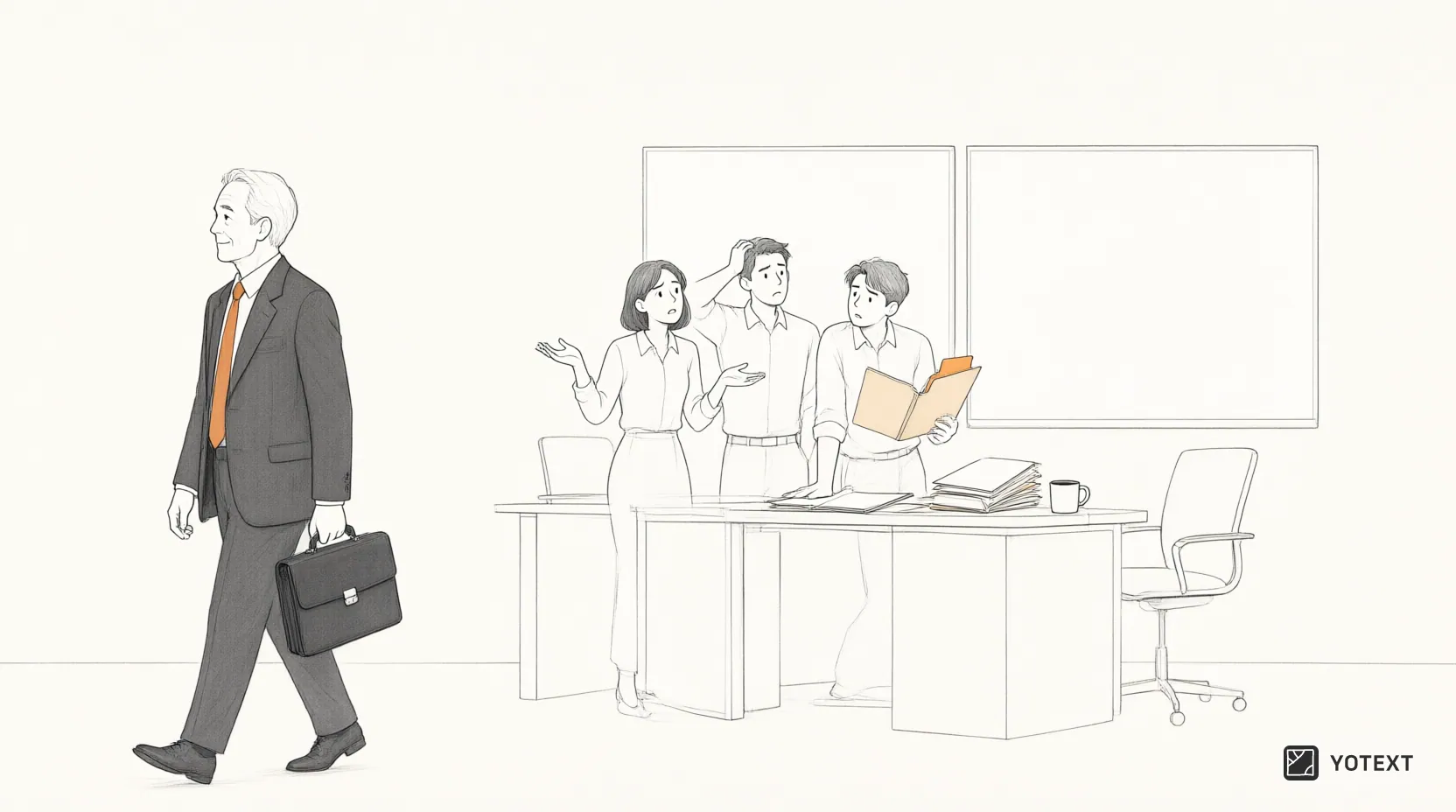
Tacit knowledge is a type of information that is difficult to codify into formal documents because it lives in social interactions and oral discussions. For years, organizations have relied on informal sharing cultures to keep this knowledge alive. However, this culture is fragile. It depends on the physical or virtual presence of specific people. If those people are absent, the knowledge disappears. Turning meeting transcripts into a structured database is a way to democratize access to this knowledge, making it the property of the organization rather than the individual.
From Raw Recordings to Knowledge Structure
Storing raw audio files alone is not enough to build a knowledge base. Audio takes a long time to process manually if someone wants to find a specific sentence. What is needed is an intelligence layer that converts voice signals into structured text. YOTEXT serves as meeting intelligence that records meetings via a browser extension on the user's computer for platforms such as Google Meet, web-based Zoom, and web-based Microsoft Teams.
This process begins with live transcription during the meeting. The extension panel displays real-time text that can be shared via a link. After the meeting ends, the system generates a full transcript, summaries, decisions, and action items along with owners and deadlines. This transformation from speech to structured text is what enables keyword search. Instead of re-listening to an hour-long recording, new team members can type in relevant phrases and find the corresponding parts of the conversation in seconds.
Accuracy of Speaker Identification and Decision Context
One of the biggest challenges in managing knowledge from meetings is attribution. Who proposed the idea? Who opposed it? In standard note-taking tools, speaker names are often ambiguous or misidentified. YOTEXT extracts speaker names from captions and participant data when available. If identities are unclear, the system uses neutral labels instead of guessing, thereby maintaining data integrity.
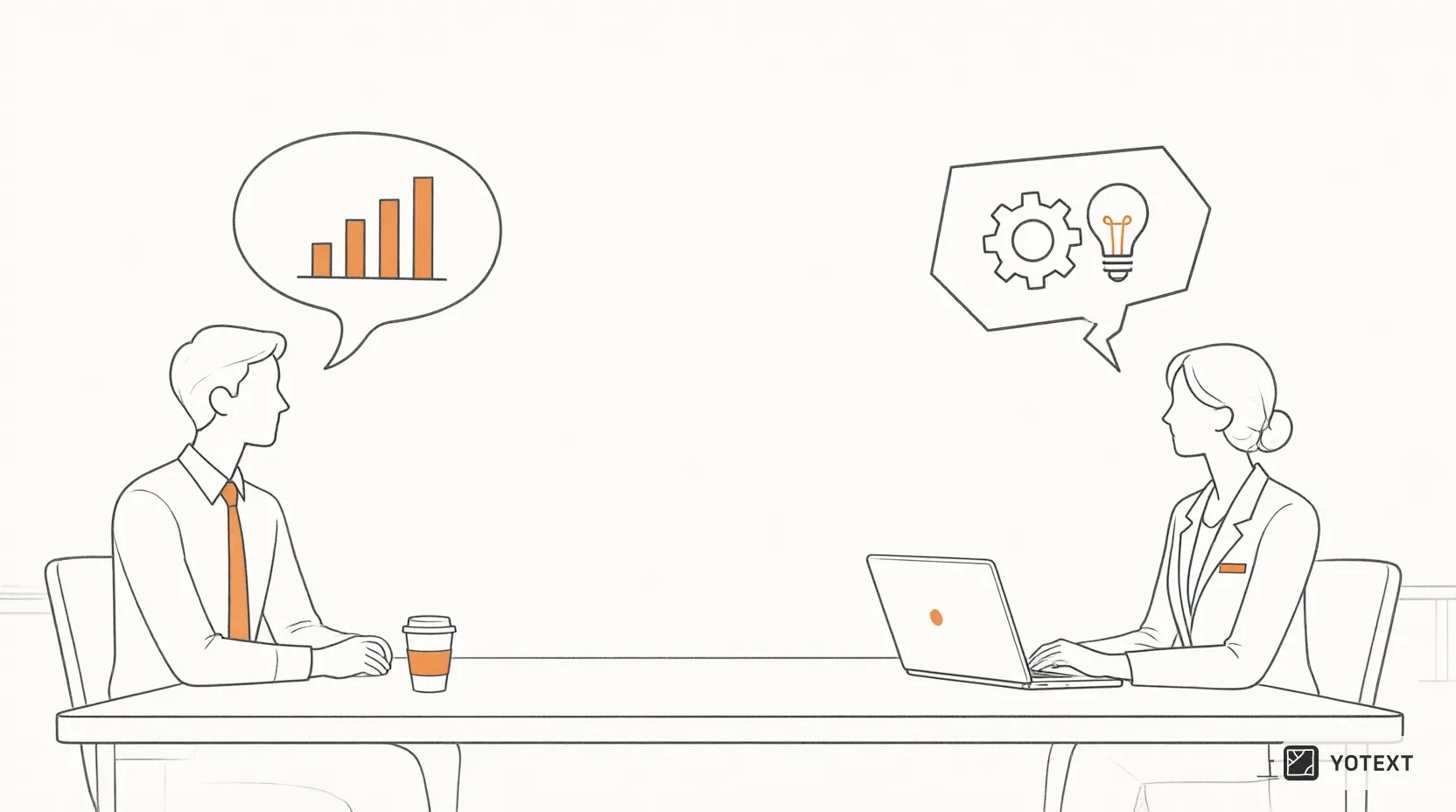
When new team members step into vacated positions, they need to understand internal dynamics. By seeing who spoke and what they said in the context of specific decisions, new teams can reconstruct past business logic. This is not just about recording facts, but capturing the nuances of negotiation and consensus. Meeting histories are stored and searchable, ensuring that the audit trail of decisions remains available to anyone with access to the shared workspace.
Cross-Meeting Task Integration as a Single Source of Truth
Knowledge is often fragmented across various project management tools. A task might be created in Jira, Asana, or Notion, but the context of its creation lies within the meeting. The Team and Business packages on YOTEXT provide a single shared workspace for meeting outcomes, tasks, and transcription quotas. A crucial feature here is the aggregation of tasks from various meetings into one centralized task list.
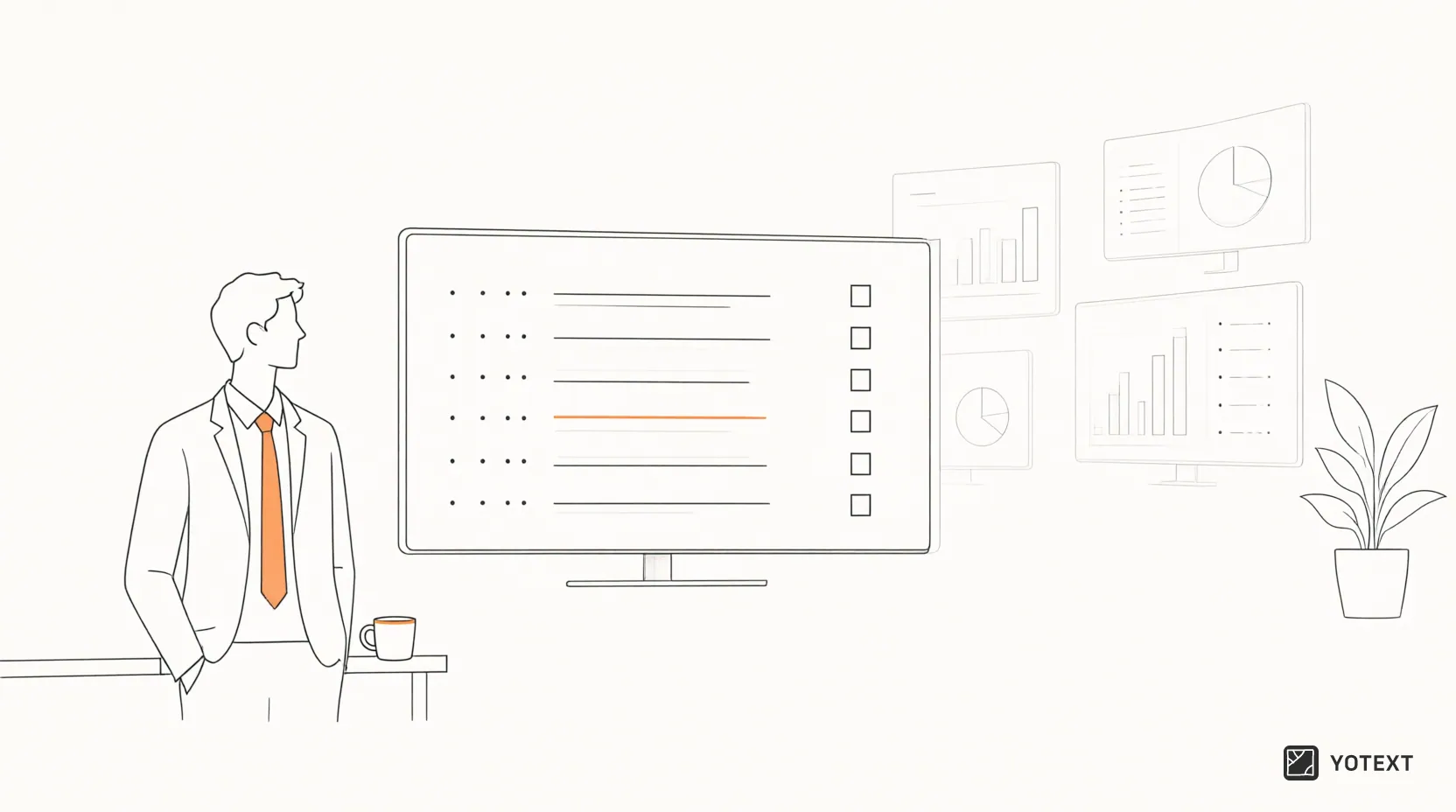
Imagine a team member taking over a project midway. They don’t need to open ten different tabs to track work status. The consolidated task list provides a holistic view of what needs to be done, who owns it, and when the deadline is. More importantly, each task item links back to the meeting transcript where that task originated. Clicking on a task takes the user to a specific moment in the conversation, providing full context that is usually lost in brief status updates.
Security and Access Control in Knowledge Sharing
Opening access to meeting transcripts raises valid concerns regarding privacy and data security. Not all conversations should be visible to every member of the organization. YOTEXT implements a model where private meetings are only visible to their owner. Meeting results can be shared as complete outputs or summaries only via links that can be revoked at any time.
It is important to note that YOTEXT does not yet have SOC 2 or ISO 27001 certification. For organizations with very strict regulatory compliance requirements against certain industry standards, this needs to be considered in risk evaluation. However, for most businesses and small teams, granular control over who can see what is sufficient to prevent sensitive information leaks while still facilitating internal knowledge flow. Recordings remain secure if the browser closes suddenly or the network disconnects, ensuring no data is lost due to technical disruptions.
Bot-Free Recording Mechanism
Many other AI tools join meetings as participant bots, which sometimes makes the atmosphere awkward or disrupts the natural dynamics of discussion. YOTEXT uses a different approach. The extension records audio from the meeting tab and the user’s microphone directly from their own browser. No bot joins the meeting as a participant. Users themselves determine when recording starts and stops.
This approach respects user autonomy and reduces psychological friction in technology adoption. Because recording happens on the client side (browser), latency is low and control remains fully in human hands. If multiple participants in the same meeting use YOTEXT, each person’s speech can be corrected using recordings from their own microphone, collectively improving transcript accuracy without requiring complex IT administrator intervention.
Practical Strategies for Building a Knowledge Sharing Culture
Technology is merely an enabler. Successfully preventing context loss depends on changing team behavior. The first step is getting accustomed to sharing transcript links immediately after the meeting ends. Don’t wait until the next day. Let absent team members read summaries and decisions in real-time.
The second step is leveraging the Q&A feature. After the meeting, users can ask questions about specific meeting content. Encourage new team members to use this feature instead of repeatedly asking senior colleagues. This reduces the cognitive load on experts and speeds up onboarding. The app is available in Indonesian, English, and Mandarin, making it easier for multinational or diverse teams to participate in the same knowledge ecosystem. Meeting results can be accessed from both computers and mobile phones, although recording via the extension is done on a computer.
Conclusion
Transforming meeting transcripts into a collective knowledge database is a strategic investment for businesses and small teams vulnerable to personnel turnover. With YOTEXT, organizations can capture the essence of conversations, link them to execution tasks, and store them in a format that is easy to search and share. This process turns fragile tacit knowledge into durable explicit assets.
Although it lacks certain enterprise-level security certifications, the access control and privacy mechanisms offered are robust enough for most internal collaboration needs. The key lies in consistency in tool usage and the willingness to share context, not just final outcomes. Thus, when key team members change roles or leave the company, they leave behind an intact legacy of knowledge, rather than empty gaps that must be filled by guesswork.
Sources
https://www.read.ai/articles/knowledge-management-tools
https://www.salesforce.com/au/service/what-is-knowledge-management/best-practices/
https://enterprise-knowledge.com/top-knowledge-management-trends-2026/